
Art for Animation: Shūichi Kusamori
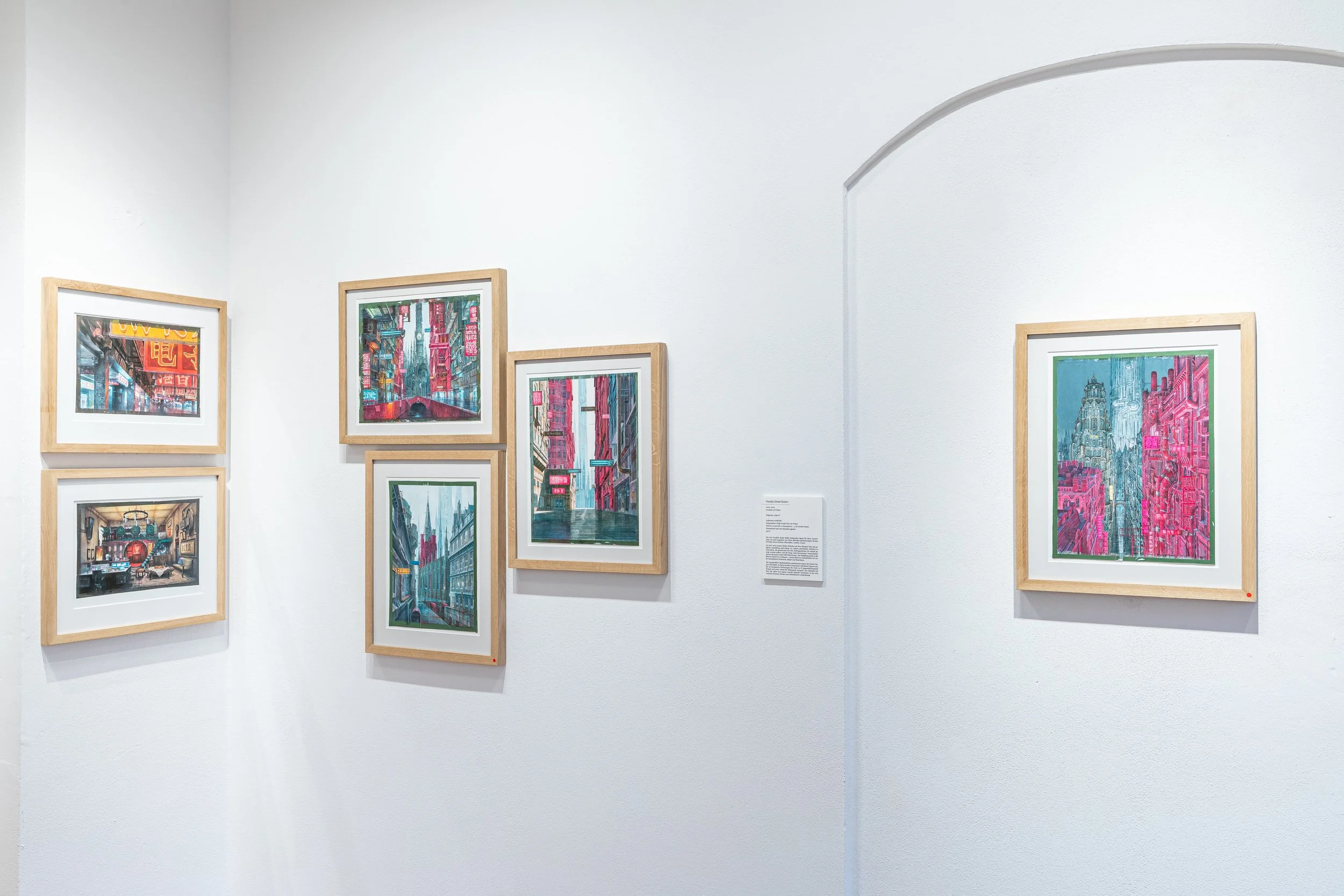
Exhibition view at Riekeles Gallery. Photo by Adam Sevens.
From October 16, 2025 to March 14, 2026, Riekeles Gallery presented the first solo exhibition of Shūichi Kusamori.
Born in Kanagawa in 1961, Kusamori is a leading Art Director of Japanese animated films. For more than forty years, his images have shaped what we know today as "anime." He is particularly renowned for his extremely detailed depictions.
At the heart of the exhibition were Kusamori's original pencil drawings for his graphic novel Fuyū no Ō (The Winter King, Graphic-Sha, 2018). Exclusively for this exhibition, the artist also created a new series of four original paintings inspired by China Miéville's Perdido Street Station. To mark the occasion, Riekeles Gallery published three new solegraphs of the artist's work for Innocence (2004), presented alongside the previously released solegraphs of his backgrounds for Ghost in the Shell (1995) and Metropolis (2001).
The exhibition opened on Wednesday, October 15, 2025, 6:00 pm, in the presence of the artist. Riekeles Gallery, Am Bassin 10, 14467 Potsdam.
Fuyū no Ō (The Winter King)
A major part of the exhibition was dedicated to Kusamori's original pencil drawings for his graphic novel Fuyu no Ō (jp.: 冬の王; The Winter King), which he wrote and drew himself, published by Graphic-Sha in Tokyo in 2018 and long out of print. The drawings reveal his unmistakable artistic signature — an extraordinary devotion to detail.
Kusamori belongs to a generation of artists who began with pencil and brush and came to digital tools late. He is skilled in both, but for inventing worlds he still relies on paper. As he puts it, drawing on paper is a process of discovery through action rather than the execution of a finished idea. Many of his concepts begin this way. His painted backgrounds may be more immediately striking, yet in his own view these drawings are the true core of his art — it is here that the search for a personal visual language becomes visible, in thousands of pencil strokes that let one watch an artist disappear into a world of his own making.
The Winter King was inspired by the Japanese translation of Erling, a short story by the German-Jewish writer Hugo Landsberger (pen name: Hans Land), published in 1912 by the translator and author Mori Ōgai, who changed the title from Erling to Fuyu no Ō. Land's brief travel sketch from 1905 — largely forgotten in the German-speaking world but well known in Japan — depicts the seascape of Denmark, whose solitude frames the story of a tragic life. Kusamori took up key elements of the narrative, yet his drawings interweave European motifs from different eras with mythical undertones, creating an atmospherically rich world that extends far beyond the literary setting of the original story, inviting viewers on a journey that crosses the boundary between reality and dream.
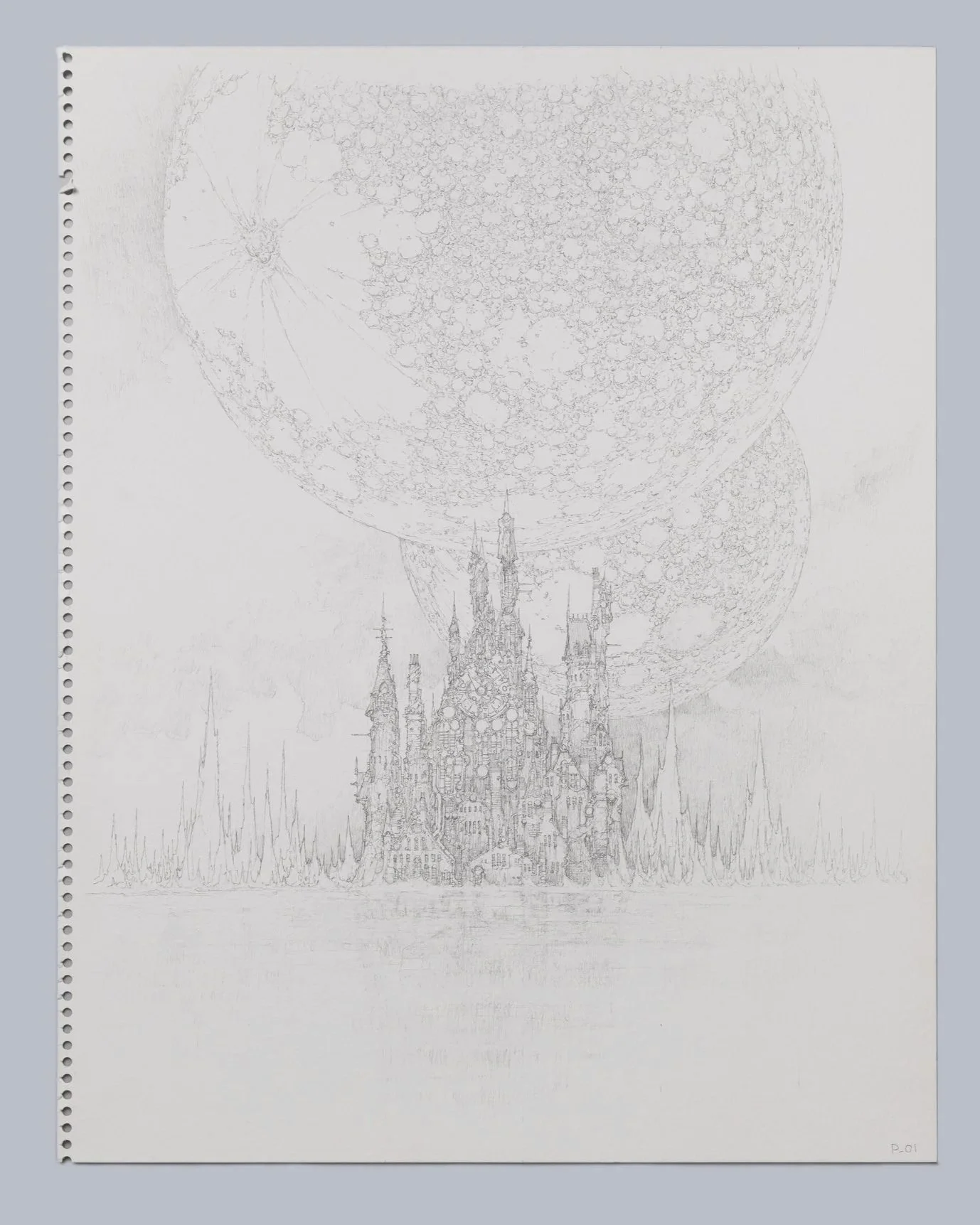
Original drawing for the graphic novel Fuyu no Ō, page 1, pencil on paper, format: 407 × 321 mm.
Perdido Street Station
Exclusively for the exhibition, Kusamori created a new series of four paintings — gouache on paper, 2024–2025 — inspired by China Miéville's novel Perdido Street Station (Macmillan, London, 2000), set in the fictional city of New Crobuzon: a dark, industrial place filled with fantastic creatures, magic and machinery. The cityscapes depicted are drawn from one of the novel's final chapters and carry ornaments and small figures reminiscent of Kusamori's drawings for Fuyu no Ō and his work on Metropolis — recurring forms, beings and architectures that make up his own visual language.
The series originated in a 2023 conversation between Stefan Riekeles and the artist about the planned exhibition, in which Riekeles suggested Kusamori develop personal, self-initiated works to show alongside his commissioned anime pieces. Asked about literary inspirations, Kusamori named Miéville's novel immediately.
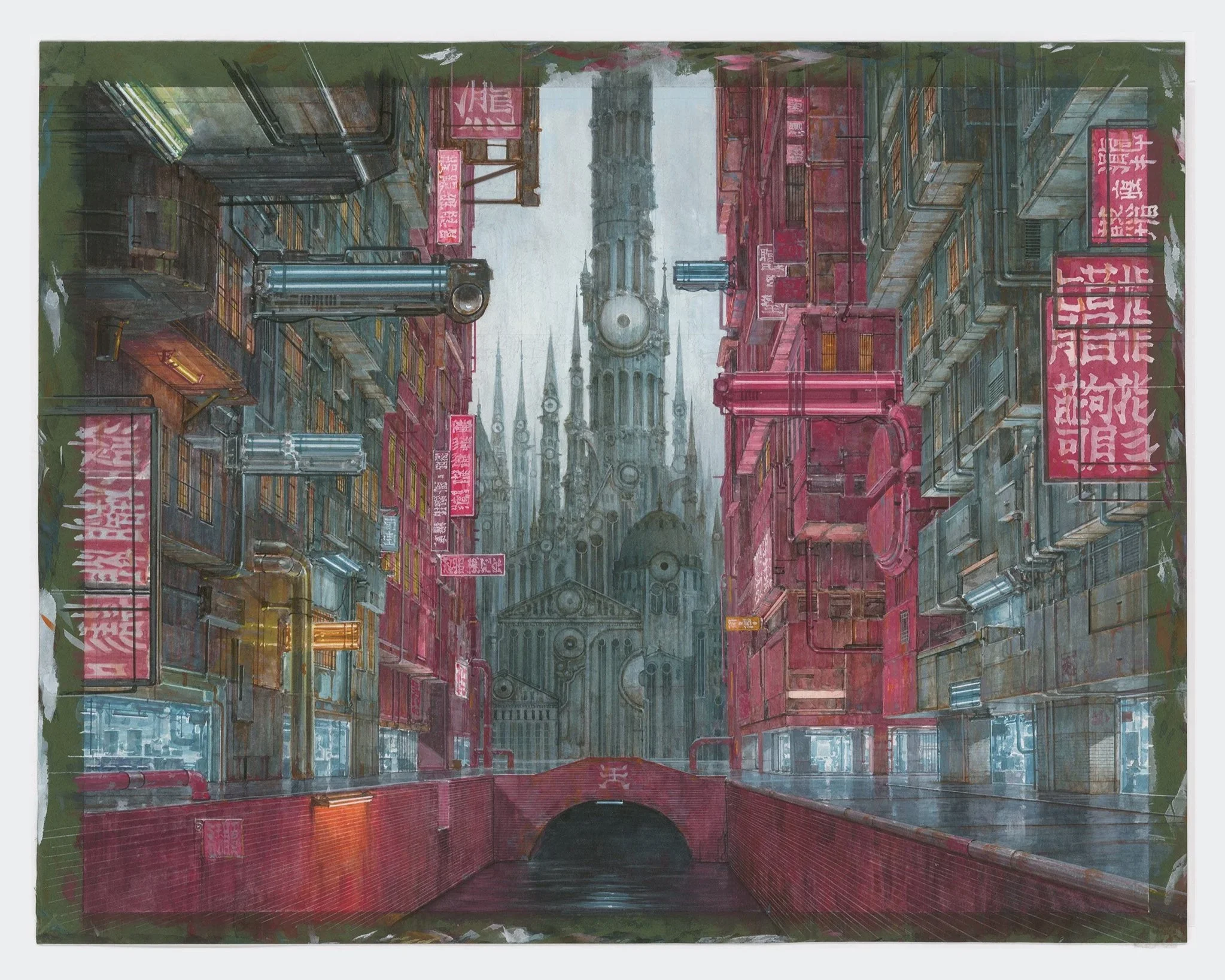
Perdido Street Station, Scene No. 3, gouache on paper, size: 402 × 295 mm
About the Artist
Shūichi Kusamori (b. 1961, Kanagawa) is one of Japan's foremost Art Directors in animation. For more than four decades, his images have defined the look and feel of what we know today worldwide as "anime."
After graduating from Tokyo Designer Gakuin, he contributed to seminal films including Grave of the Fireflies (1988), Patlabor: The Movie (1989), and Ghost in the Shell (1995). As Art Director, he shaped the visual universes of Metropolis (2001), Innocence (2004, Cannes Film Festival), xxxHOLiC: A Midsummer Night's Dream (2005, Annecy), and the internationally acclaimed PSYCHO-PASS series (2012–2023).
Kusamori stands out for his ability to create imaginative, otherworldly settings with striking realism. While most background artists paint from concepts developed by others, he conceives his own visions, imbuing films with a unique atmosphere. His work is marked by an almost obsessive attention to detail: every stroke contributes to a rich, immersive whole.
Read more about Shūichi Kusamori in Stefan Riekeles’ curatorial comment.
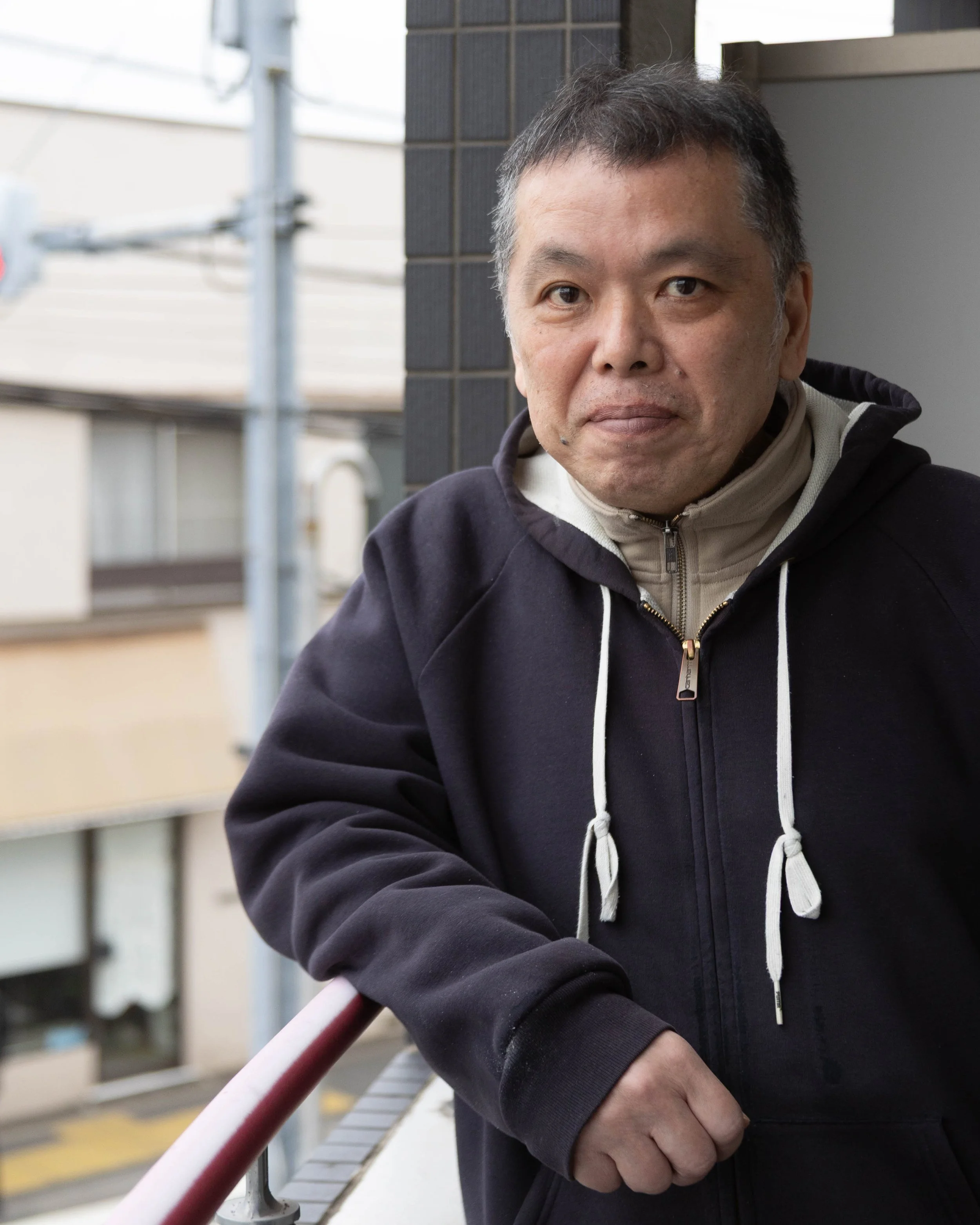
Shūichi Kusamori by Yasuyuki Takagi, 2023.
Related Events
The exhibition was accompanied by a public programme. On Saturday, October 18, 2025, Kusamori was a guest at Filmmuseum Potsdam for a screening of Robotic Angel (Metropolis, dir. Rintarō, Japan 2001), followed by a conversation with curator Stefan Riekeles about his work and the film's visual world. On Sunday, October 19, 2025, Parklichtspiele Buckow hosted a double feature and artist talk: Ghost in the Shell (1995), for which Kusamori painted the highly detailed backgrounds under art director Hiromasa Ogura, followed by a conversation on his career and the global rise of anime, and Ghost in the Shell 2: Innocence (2004), art-directed by Kusamori and the first anime ever nominated for the Palme d'Or at Cannes. On Friday, October 17, 2025, Filmuniversität Babelsberg KONRAD WOLF hosted a workshop on Kusamori's gouache painting process, focused on his techniques for rendering weathered surfaces, rust, and urban decay.
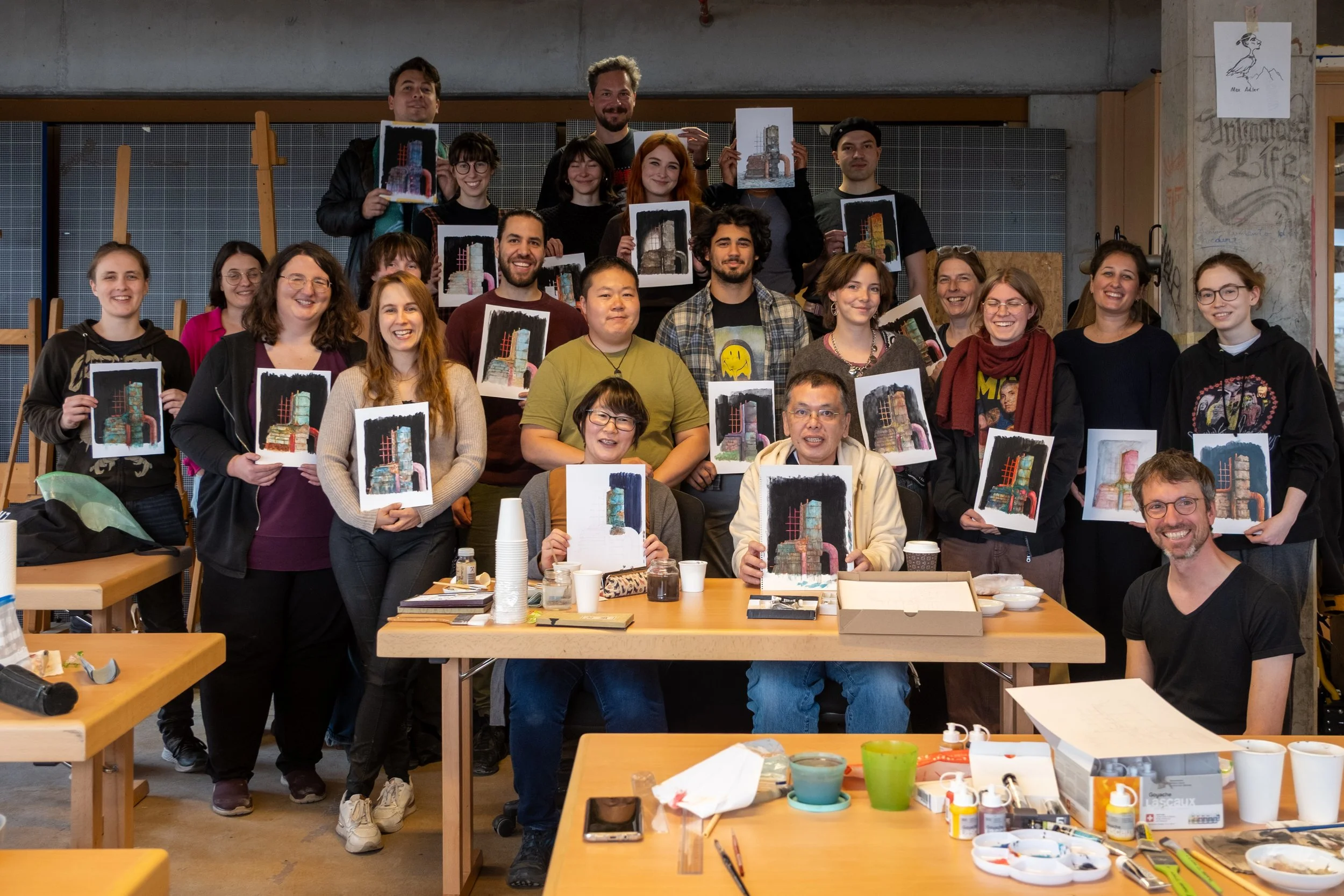
Participants of the workshop with Shūichi Kusamori at Filmuniversität Babelsberg KONRAD WOLF.
Partner Exhibition
Mori Ōgai (1862–1922) is considered one of the most important authors of modern Japanese literature; as a military doctor, translator, and writer, he introduced Western literature and ideas to Japan. The Mori Ōgai Memorial Center of Humboldt University Berlin, located in the building where he first lived during his stay in Berlin (1887–88), presented a parallel exhibition on Kusamori's work, on view from October 30, 2025, featuring a further selection of drawings from Fuyū no Ō.